
If you’ve recently looked into testing your home for radon in Winnipeg, you may have come across the radon test kits available through Winnipeg Public Library program.
They’re a great resource. But right now, demand is high. As of April, there are over 2,600 holds on available kits.
The program typically runs between November 1 and April 30, which means access may be limited or paused outside of that window.
This doesn’t mean the program isn’t a good option. It just means timing can be a challenge if you’re looking to test your home soon.
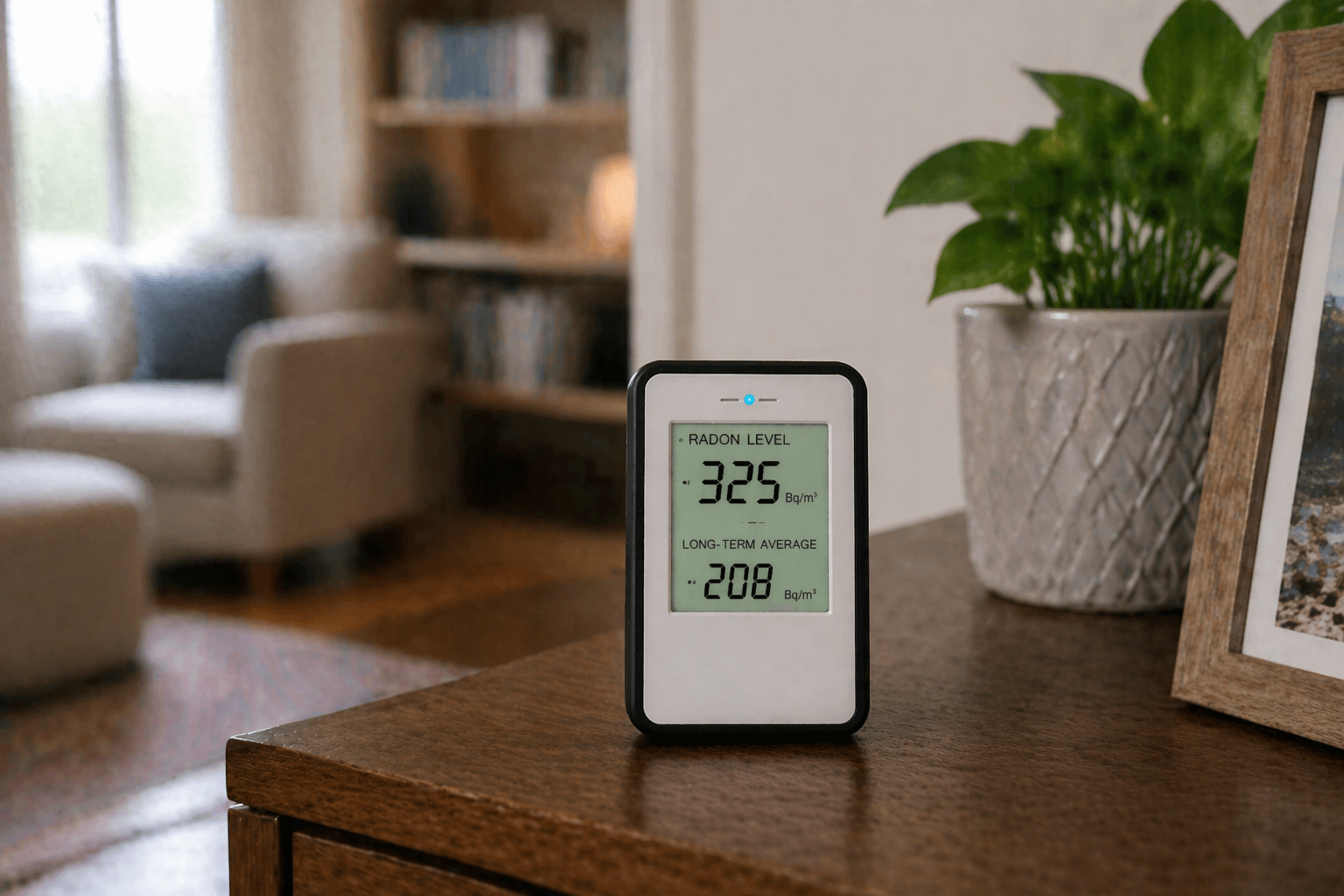
A radon test device set up in a Winnipeg home to monitor indoor radon levels.
How Winnipeg Library Radon Test Kits Work
Winnipeg Public Library offers long-term radon test kits that you can borrow for free.
These tests are placed in your home for about 90 days, then sent to a lab for analysis. The results are used to determine your home’s average radon level over time.
This type of testing is considered the most accurate way to measure radon exposure.
Why There’s a Waitlist
Awareness of radon has been increasing across Manitoba, and more homeowners are choosing to test.
Because the number of kits is limited, waitlists are common. In some cases, there can be hundreds of people ahead.
That means it may take time to get a kit, and results won’t be available until several months later.
Should You Wait or Take Action Now?
That depends on your situation.
If you’re simply curious and don’t mind waiting a few months, the library program is a solid option.
But if you’ve recently moved, spend a lot of time in your basement, are planning a renovation, or just want to understand your home’s levels sooner, waiting may not feel ideal.
What You Can Do While You Wait
One option is to start with a short-term test.
Short-term testing doesn’t replace a long-term test, but it can help you understand your home’s current conditions and whether there’s any urgency.
It can give you a quick sense of whether your levels are low, moderate, or something you may want to act on sooner.
You can then follow up with a long-term test, either through the library or with a kit of your own, to confirm your home’s average level.
A Practical Approach to Testing
For many homeowners, a simple approach looks like this:
Start with a short-term test to get a quick sense of current levels
If needed, follow up with a long-term test for a more accurate average
Take action only if levels are elevated
This allows you to move forward without waiting months for an initial answer.
Radon Levels Can Vary From One Home to the Next
Radon levels can vary widely, even between homes on the same street.
Radon enters from the ground, and factors like soil conditions, foundation type, small cracks or openings, and airflow inside the home all affect how much builds up indoors.
Testing is the only way to know your home’s level.
If You Want a Quick Answer
If you live in Winnipeg and would prefer not to wait, we offer a free 15-minute radon test and consultation.
This gives you a quick sense of your home’s current radon level and helps you decide what to do next.
Learn more about how radon testing works or request a test
Final Thoughts
The Winnipeg Public Library radon test program is a great resource, and long-term testing remains the most reliable way to understand your home’s average radon level.
If you’re on the waitlist, there are still steps you can take in the meantime to better understand your home’s current conditions.
Testing doesn’t have to be all or nothing. It can be a simple first step.