
The Manitoba Lung Association recently released its 2025–2026 Annual Report, and one message is clear: awareness of radon continues to grow across our province.
One stat in particular jumped off the page for me:
Nearly one million Manitobans can now access free radon screening through the Radon Lending Library Program. That's a huge increase from about 197,000 people just a year earlier.
For anyone who works in radon, that's encouraging.
I've been testing homes across Winnipeg for 8 years, and one of the biggest challenges has never been convincing people to do something about high radon. It's getting enough people to test in the first place. The more homeowners who know their radon level, the better.
A few other things stood out as I read through the report.
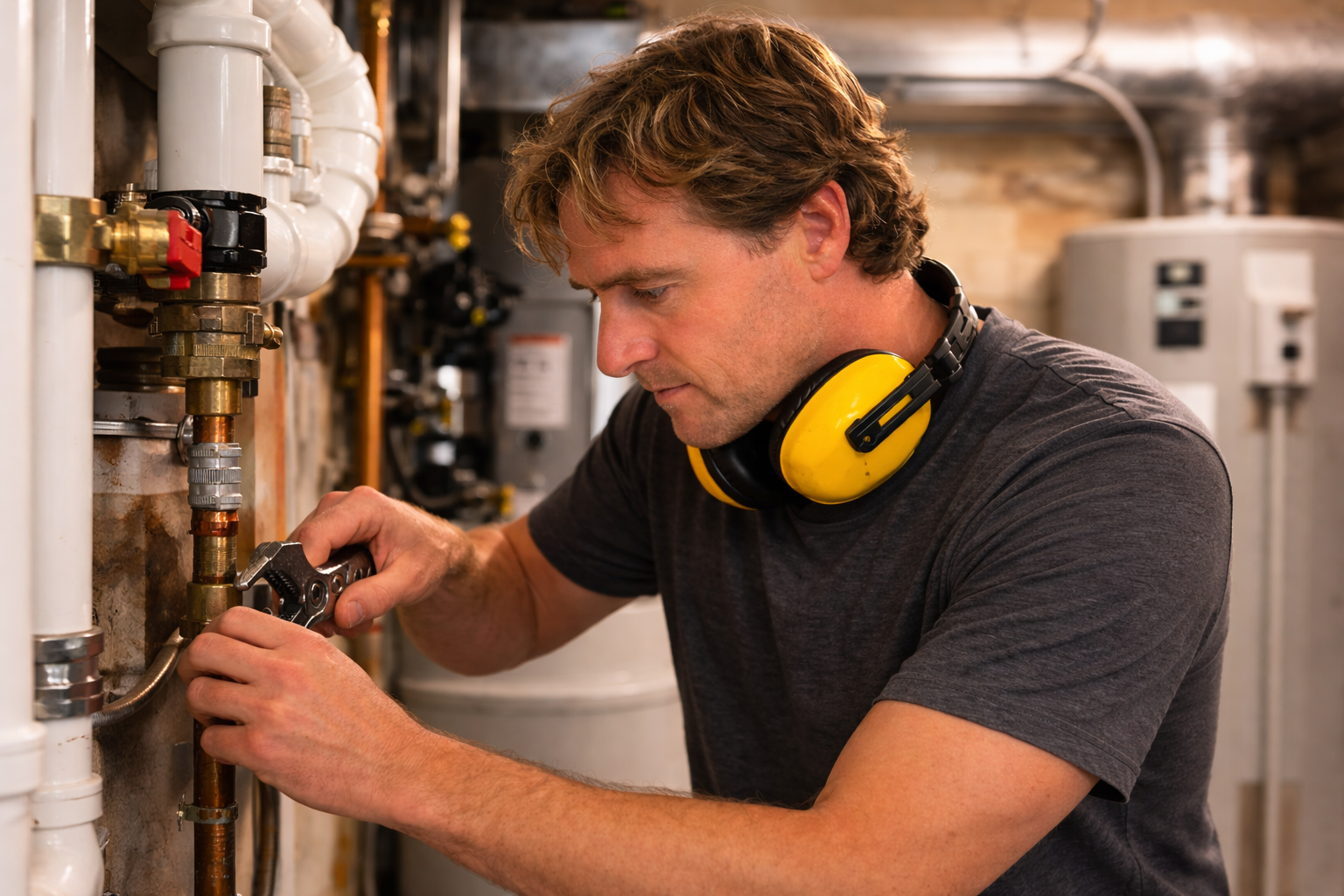
Radon professional installing a radon mitigation system in a Winnipeg home.
Nearly 1 Million Manitobans Can Now Access Free Radon Screening
The Manitoba Lung Association has expanded its Radon Lending Library Program to libraries and community organizations across the province. According to this year's report, nearly one million Manitobans now have access to free long-term radon detectors.
That's good news.
Cost has never been the biggest barrier to testing. Awareness has. Many people simply don't know that radon exists or that testing is the only way to know what's in their home.
If your local library has a detector available, borrow one. If there's a wait list (as of April 2026 there were +2000 on the waiting list), buying a long-term test kit is another easy option. The important part is doing the test. I can also visit your home and do a free on-the-spot radon test to give you a general idea of your level.
More Manitobans Are Testing
The report says more than 2,100 detector loans have already been completed, with 364 detectors circulating throughout Manitoba libraries and community locations.
That tells me awareness is growing.
One conversation I have almost every week starts the same way.
"I didn't think my house would have high radon."
Sometimes it's a brand-new home. Sometimes it's a fifty-year-old bungalow. I've tested neighbouring homes with completely different results.
People often ask whether one neighbourhood is worse than another or whether older homes are more likely to have radon. Unfortunately, it isn't that simple. Soil conditions, how the home was built, and even small differences in airflow can all affect radon levels.
That's why testing matters. It replaces assumptions with an actual measurement.
More Homeowners Are Moving Ahead With Mitigation
The Manitoba Lung Association also reports growing demand for its Lungs Matter Radon Mitigation Grant Program, which helps eligible families reduce high radon levels.
A radon test answers one question: how much radon is in your home.
If the result comes back above Health Canada's guideline of 200 Bq/m³, the next step is deciding whether to install a mitigation system.
Many homeowners are surprised to learn that most mitigation systems can be installed in a single day with very little disruption. We've installed systems in homes across Winnipeg that reduced radon levels well below Health Canada's guideline. Every house is different, but properly designed mitigation systems work extremely well.
Manitoba Continues to Have a Radon Problem
This year's report also reinforces something we've known for a long time. Manitoba remains one of Canada's highest radon provinces.
That doesn't mean every home has elevated radon.
It does mean every homeowner should know their number.
I've seen homes with very low radon levels, and I've seen homes with readings several times higher than Health Canada's guideline. Sometimes those homes are only a few doors apart.
The age of the home doesn't tell you. The neighbourhood doesn't tell you. The only reliable answer comes from a long-term test.
Awareness Keeps Growing
The report also talks about the Made-in-Manitoba Radon Action Plan, continued investment in public education, and detector lending wait lists that have grown beyond 2,000 Manitobans.
That kind of demand would have been hard to imagine a few years ago.
More libraries are talking about radon. More healthcare organizations are talking about it. More homeowners are asking questions before they renovate, buy a home, or finish a basement.
That's progress.
One Thought After Reading the Report
The thing I kept coming back to wasn't the number of detector loans or the size of the lending program.
It was the fact that more Manitobans were choosing to find out what's in their homes rather than guessing.
Every long-term radon test gives a homeowner an answer. Sometimes that answer is reassuring. Sometimes it leads to the installation of a mitigation system.
Either way, you're making a decision based on evidence instead of assumptions. That's exactly where you want to be when it comes to the air your family breathes every day.
Have Questions About Your Radon Results?
If you've completed a long-term radon test and aren't sure what the results mean, we're happy to help.
At Radon86, we work with homeowners across Winnipeg and surrounding communities to interpret radon test results, answer questions about mitigation, and install radon reduction systems when they're needed.
Call us on 204-807-1340